Are you a musician that wants to make it in the music industry? Are you not sure about the best route to take? In this blog we will learn about the music industry pre-internet and the music industry that is today. We will give you the ideal route that all musicians should follow in order to gain maximum exposure in the music industry.
DEVELOPMENT OF THE MUSIC INDUSTRY
“This practice began with the invention of the phonograph by Edison in 1877 and the gramophone flat discs Berliner first issued in 1894 (Library of Congress, 2016), which resulted in the hereto inconceivable possibility to listen to music without the need to be in presence of the performers, and to mass produce copies from a single master recording. Music thus became a physical good, a material object like any other – and the record industry was born.”
(R. Álvarez Vázquez, 2017)
This music industry began to flourish in the 20th century with the help and thanks to the overwhelming amount of talent that signed up without wanting much in return. This is how the industry became to establish itself as a multi-million-pound business, very quickly. The music industry first had sheet music, which was very popular, in order to enjoy the music. Then came along cassette, vinyl and then CD’s. They were all popular and people enjoyed the music via buying these products to enjoy the music at home.
There are four parts to the music industry:
- Recording industry
- Merchandising
- Live music
- Rights Management
The recording industry was similar in the 20th century to the 21st century. The differences are the record deals made, which are 360 to accommodate the technological changes and the change in how we consume music. The other difference is that most of the music is uploaded to streaming websites, such as Spotify, Apple Music, SoundCloud, YouTube, etc. more than physical copies are made. This is to follow the social trend, in which most of the music is all consumed online.
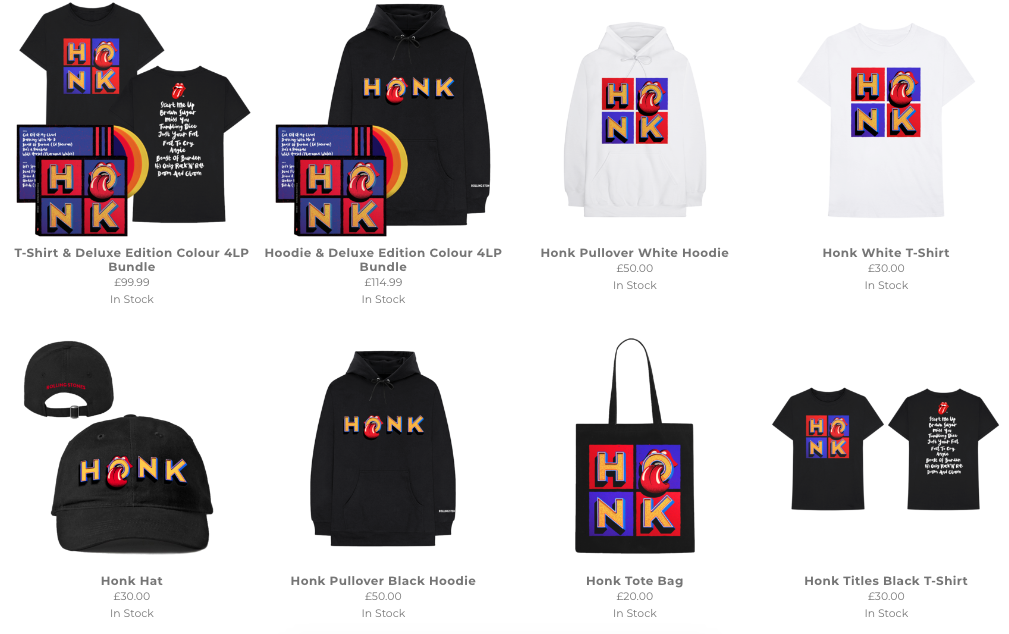
Merchandising was always big. An example of this was how the Rolling Stones used merchandise to link in with their overall personality and the brand that they had made for themselves in the public eye. Then using the logo from one of their albums they used that from then on as their ‘brand logo’. It establishes a brand for their music. It is then known by fans and other musicians world wide. Logo’s are then used on the merchandise that fans purchase and use to promote the band/artists music.
https://store.digitalstores.co.uk/rollingstones/?utm_campaign=TheRollingStones20170830&utm_content=&utm_medium=referral&utm_source=Website&utm_umguk=www.rollingstones.com%2F
This is an example of how the merchandising from the 20th century has developed from a few t-shirts, CD’s and Vinyl’s, etc. to bundles made of CD’s and T-Shirts, Jumpers, Bags, and even POP Vinyl’s are made. Merchandise is a big part of live events, as they are sold when you go and see a band/artist live. They bring in another source of income for the artist.
Live music is also a very important part of the 20th century, just as much as it is important for the 21st century. Back in the 20th century, to get your voice heard and your name known, you had to play a lot of live performances. Big or small. Touring up and down the country would widen your chances of being discovered. Whereas, in the 21st century, you can upload videos to YouTube, Social Media accounts, play in local pubs and clubs and still tour the country to get your name heard. But, the easiest way is via YouTube and Social Media as content like this goes viral fast. People share it and their friends share it and before you know it, it’s got tons of views and comments making your voice heard and a little bit of a following on social media.
“Based on definition: “DRM covers the description, identification, trading, protection, monitoring and tracking of all forms of rights usages over both tangible and intangible assets including management of rights holders relationships”
(Ghomi and Azimi, 2014)
(Ghomi and Azimi, 2014)
The DRM (Digital Rights Management) is used for “legal rights holders need to identify their content, collect the metadata, assert what are the rights on the content and provide business models for distribution. And a survey for clients to access the content.”
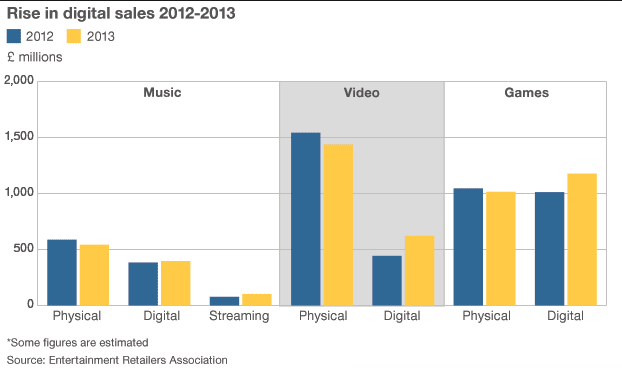
In recent years, with “the old music-industry structure rattling under the forces of technological change, increased competition, rapidly shifting public tastes, and the globalization of music” (Lathrop and Pettigrew, 2003) the general population are buying more of their music digitally. This aids them to have it on multiple devices and access to it anywhere.
“According to the latest estimates, 2011 was the first year in which the sales of digital music topped the sales of physical music” (O’Reilly, Larsen and Kubacki, 2003) Due to this, there has been closure of many record stores both in the UK, the US and many other countries as most of them are moving online.
(O’Reilly, Larsen and Kubacki, 2003)
“With everything moving online, and it is a target market for new musicians, there are more ‘360 degree’ record deals out there for the aspiring musicians, not like the deals that used to be available before “where artists, in return for financial support, and especially at the beginning of their careers, offer a share of their future earnings”
“This is why the contemporary music industry shares many of its products with other members of the broad entertainment family. For example, music is used in the gaming industry, film industry…” (O’Reilly, Larsen and Kubacki, 2003)
With this is in mind, we have to recognise this as a major trend in the music industry of today. The musicians have to engage in performing live, recording albums, film and broadcasting their music in order to become profitable. The musicians have to share their music with other members of the entertainment industry in order to gain money, and other great deals with films, television, etc.
THE DEATH OF THE GATEKEEPERS: the Internet and the music industry
Going viral: the importance of an online presence and how YouTube and the internet is changing how artists work
Due to technological and cultural change, we know that production, distribution and how the traditional method of how you become an artist has changed but so have the gatekeepers.
Gatekeeper – definition: The ones who have the power to open gates.
“Conventional music industry gatekeepers are still abundant and powerful in the role of building and popularizing artists and music. They contribute to brand-building in traditional ways by making audiences aware of artists and artists’ products via conventional channels.” (Lieb, 2018)
Lieb, K. (2018).Gender, Branding, and the Modern Music Industry: The Social Construction of Female Popular Music Stars. Routledge.
In regards to the music industry, these gatekeepers have always been either consumer gatekeepers or artist gatekeepers.
Artist Gatekeepers
– Labels
– Publishers
– People who record/press and distribute music
Consumer
– Radio
– Newspapers
– TV
– People who controls which artists and music reached the consumers
THEN THE INTERNET CAME…
Due to the internet and what that brought with it, the new gatekeepers are the ones that have become a lot more important, and the ones that new artists tend to focus on in regards to exposure and getting your face and your name known. YouTube, Spotify, Tidal, Facebook, Twitter, Instagram and Soundcloud are all perceived as the new gatekeepers. Not only do they allow new artists to share their content and get themselves known, they offer a revenue stream and a way for upcoming artists to make money whilst they’re starting their career.
(Hughes, Evans and Morrow, n.d.)
“Digital disruption has transferred the relationship between artist, industry and consumer”
Digital revolution encouraged blogging, YouTube channels, Myspace and facebook pages and these became new gatekeepers – these places all giving artists room to find a place with the music they loved and favoured.
STREAMING
From Grooveshark to Spotify, we have come a long way. Now services like Spotify and Apple music act as the primary gatekeepers between the consumer and upcoming and successful artists and their music because with innovation came practicality and having a streaming service where you can access whatever you want is a lot more practical for consumers that buying albums and singles. This shift has made the dynamics change, so now “In the streaming era, a new gatekeeper stands between record labels and listeners: the playlist professional.” (Shah, 2019)
The major labels still have a huge part to play in the growth of the industry because of the global reach they have already had and experienced. They know the marketing and distribution side to this industry so well so it is important they focus on the mass market.
To conclude, I don’t think that the gatekeepers are ‘dead’, I think they have just evolved as time and technology does. Eg, Roger Paxon going from being a label to becoming a part of a major streaming service which is now holding the most power over the industry and consumers.
Roger Faxon, EMI (2012)
“major record labels, if they ever were, are no longer the gatekeepers. It’s the music that matters, not the source anymore. You don’t have to have a [major label] to produce an album anymore. The power now is with consumers, not labels.”
GOING VIRAL: the importance of an online presence and how YouTube and the Internet is changing how artists work
The importance of staying active online and engaging with your audience is key to your success online, and increases the likelihood that your posts will go viral if unique and impressive enough. You may think that going viral looks like it happens by chance, but nearly 100% of the time, it takes a lot of time. “Social networking, like any public relations effort, requires hours of work, regular updates, constant monitoring, and ongoing research into the latest trends and technologies.” (Erickson., 2017)
If you are an up coming artists and primarily want exposure and a way to share your content before you even have been signed with management or agents, the easiest way to go is with YouTube videos. The cost of production is little to none and all you need is the camera phone you carry around with you every day. YouTube has become a massive player in the global music industry.

(Fitterman Radbill, 2017)
“Master rights holders (labels or performing artists themselves) earn royalties every time their recording is streamed in a YouTube video if their video has an advertisement attached to it. YouTube earns its revenue from advertising partnerships, then shares the earnings with musicians and music rights owners.”
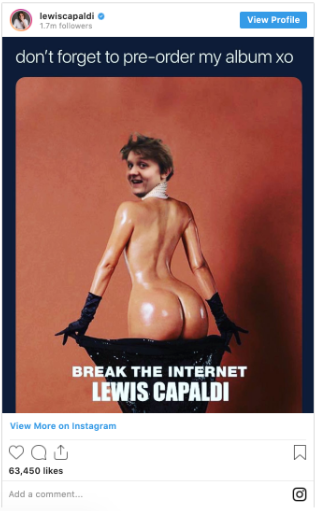
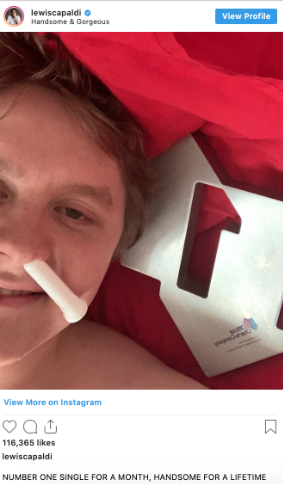
I think it’s also important to make sure you’re being relatable and being yourself. We have all experienced the world wind success that Lewis Capaldi has had over the past few months. “The official music video for his number one hit has 13,396,281 million views on YouTube at the time of wiring (April 18), and Capaldi has racked up over a million followers.” (Brown, 2019)
Fans have found Capaldi’s approach to fame refreshing because he is down to earth and relatable, but in terms of social media and building a brand and a name, these artists know that it is the way forward. Not only have Capaldi’s quirky talk through videos posted to his Instagram been extremely insightful for fans to get to know him a lot more, they have been the thing that has sprung him to the forefront of major online news platforms and his face has been everywhere with people laughing along and saying how funny and how relatable he is. As soon as you have that audience acquired, they can’t help but to want to listen to your music to support you.
“YouTube has become radio for kids,”
says Ken Levitan who manages Kings of Leon.
Because of this rise in popularity, it does cause a lot of problems for more established artists on the platform. Like many other artists, Deadmau5 has experienced this first hand. In 2016, he’d found a YouTube channel with over 400 unauthorized videos containing his songs, album releases, remixes, and full live shows. No matter how hard you try and get them removed, another account will pop up the day after and will re-upload, so it’s difficult for artists because it pays less on average than streaming services like Spotify and Apple Music.
“Like any site, YouTube can stream material without artists permission thanks to the 1998’s Digital Millenium Copyright Act (DMCA).”
(Rollingstone.com, 2019)
Steve Miller
“YouTube destroys my business and makes money by enabling theft worldwide.”
Without the involvement of the third party promotions and traditional ways of advertising, the musicians can build their fame. The artists technically don’t need to invest a single penny.
YouTube can help smaller artists create a fan base and clutch millions of fans worldwide.
A lot of brands are approaching musicians because they make great influencers – drive sales for brands.
The most successful artists on YouTube that have millions of subscribers, will be participating in the YouTube monetization strategy. This allows the artist to raise the income generated by the channel through the use of ads in their music videos.
MARKETING STRATEGIES FOR THE MUSIC INDUSTRY
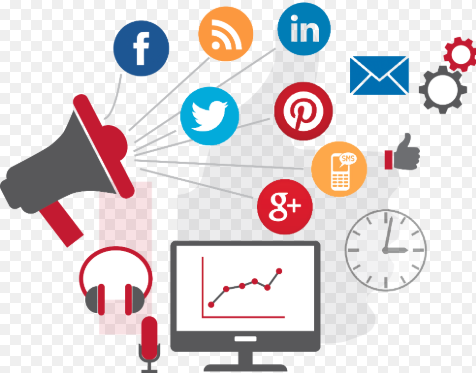
In order to market successfully, you have to use the 4 P’s.
The 4 P’s:
Product, Price, Place and Promotion.
- Analyse the market
- Define your audience
- Establish long and short term goals
- Use your marketing strategies
- Create your budget
Marketing back then consisted of relying on CD and record sales, ticket sales, major labels for income and getting their name known. They also relied on posters/billboard images and playing live to get their image and name out there.
Marketing today consists of
– Being active on all social media accounts (Facebook, Twitter, etc)
– Creating merchandise to sell your brand and generate an income
– Playing live to showcase your talent and your music content (also generates money)
– Video Marketing – one of the best tools for digital marketing (use YouTube/Vimeo)
– Ticket prices from playing live and touring
– Streaming services (fast downloads on songs and can access anywhere – following the social trend)
It is important you define your target audience before you start. If you know who you are targeting your musical content at, it will be easier to use the marketing strategies to your advantage.
SOCIAL MEDIA
“Social Media platforms have given musicians more control over the distribution of their music and through the use of services such as Spotify*, many artists now have the option to bypass the industry conventions completely”
(TrendJackers.com, 2017
Being very active using your social media accounts will give you the exposure you are looking for. Musicians and Artists today are ever present on their social media accounts engaging with fans, sharing content, personal images, teasers, etc. This gives you a connection with the audience you are trying to reach. Some examples of artists that have used social media well are Lewis Capaldi, Justin Bieber, 5SOS, etc.
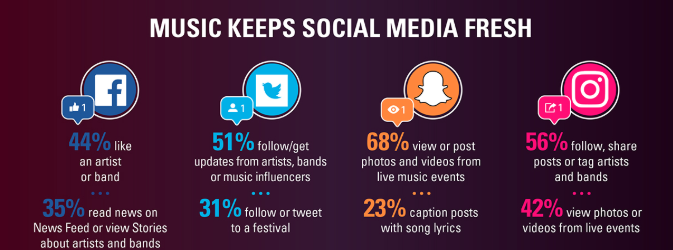
“…social media are increasingly used for sharing information about music albums and songs—and also for the sharing of the music itself. Traditionally, users discovered music either through radio play or from their friends, and consumed it through album purchases…”
(Dewan, S. and Ramaprasad, J. 2014)
A lot of children, teens and even adults use social media to follow their favourite artists, actors, footballers, etc. They engage with what they are posting and it gives them a sense of ownership to the music and they connect a lot more with you as an artist. Which, inevitably means they are more likely to come to your live shows, buy your CD’s or digitally download them and even buy your merchandise.
CASE STUDY: JUSTIN BIEBER
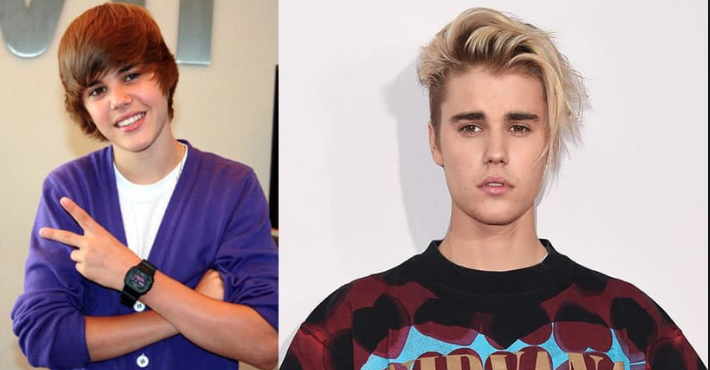
Justin Bieber was discovered by Scooter Braun, a famous producer and talent agent when he came across a video that Justin’s mother had uploaded to YouTube of him performing. Braun invited Justin out to Atlanta and signed him to a record label. I will talk you through just how Justin became the Justin Bieber we know today.
CREATING AN ONLINE PRESENCE
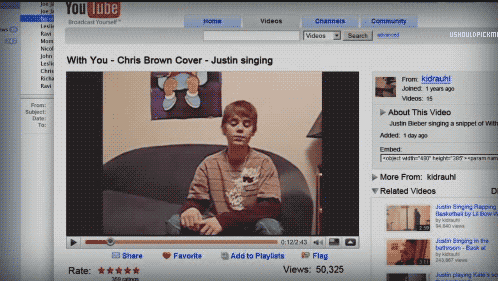
His mother had uploaded 5 videos of him on YouTube, one of these reaching 70,000 hits. Justin then opened a Twitter account and spent every day talking to fans, engaging and starting conversations. He also used this platform to post more personal videos, sneak peaks into his life, so by the time his album was released he already had millions of followers online.
For You
This is so important when thinking about entering the industry. Start small and local, make some social media accounts, do some interesting things, talk to fans and most importantly, be yourself. Building up a loyal following will help you so much when it comes to sales, views on music videos and to your overall success within the industry.
ENGAGE EARLY
Everywhere Justin would go, it caused a lot of disruption and a masses of people would flood to see him at any given opportunity. There was one little girl no older than 3 years old who was recorded crying over Justin when he’d reached 12 million views on YouTube. Scooter was quoted saying “Kids would rather discover something on the Internet than hear it on the radio… there’s a sense of ownership. People feel more connected to Justin, and they deserve to, because they made him.”
For You
Being honest, transparent and building a real bond with your fans and followers, generates loyalty and a sense of ownership for your fans.
LISTEN
Biebers dedication to building his social media following and using tools like Twitter and YouTube, gave him insight, access and enabled him to build a relationship with his following. Essentially, their strategy was to then listen to the comments and give the fandom what they wanted, automatically appealing to that specific target audience.
For You
Use what you have to give you the leg up. We know have even more platforms like Snapchat and Instagram so utilise them. It doesn’t even cost you anything because creating a profile is free! Listen to your following and listen to the demand. Give them what they want and it will do you the biggest favour later on. Don’t assume you know best.
STAY ENGAGED
Most of these child stars end up fading out because their egos get too big and it all goes to their head and they forget that the fans have gotten them there, have invested in them as a brand and an artist. Slowly fan interest disappears and they drop out of sight and mind. Justin made sure that he remained in control and even throughout his rough patches, constantly reminded fans he was only there because of them and that they give him strength.
For You
Maintaining a dialogue even if there is a scandal or you go through a rough patch is so important. Never let your success get to your head and you become arrogant and dismissive of fans and followers opinions and suggestions. Never let yourself be removed from your consumer base.
Overall, this strategy is nothing new but it was vital to his success as an artist and helped shape him and his views. He created incredible music, promoted himself and the music through the use of social platforms, was constantly engaging with fans, his team and followers and made sure that the fans opinions shaped what he was doing and what he was presenting to them. Investing your time wisely is so important.
Remember to engage with your fans via all social media outlets, focus on your music and making quality content to share with fans, market using videos, snippets, live performances, etc, create a brand for yourself – make sure your merchandise and social media accounts represent this. It will take A LOT of dedication and time.
Bibliography
- R. Álvarez Vázquez, R. (2017). THE MUSIC INDUSTRY IN THE DAWN OF THE 21st CENTURY – Networking for a thriving music industry. [ebook] Kunnskapsverket. Available at: https://www.researchgate.net/publication/318014176_The_music_industry_in_the_dawn_of_the_21st_century/downloa
- O’Reilly, D., Larsen, G. and Kubacki, K. (2003). Music, markets and consumption. Oxford: Goodfellow.
- Lathrop, T. and Pettigrew, J. (2003). This business of music marketing & promotion. New York: Billboard Books.
- Ghomi, A. and Azimi, A. (2014). Digital Rights Management. Unknown.
- Lieb, K. (2018).Gender, Branding, and the Modern Music Industry: The Social Construction of Female Popular Music Stars. Routledge.
- Hughes, D., Evans, M. and Morrow, G. (n.d.). The New Music Industries.
- Shah, N. (2019). The Music Industry’s New Gatekeepers. [online] WSJ. Available at: https://www.wsj.com/articles/the-music-industrys-new-gatekeepers-1510761601.
- Angela Erickson. (2017). So You Want to Join the Music Industry : Here’s the Info You Need.
- Brown, E. (2019). Lewis Capaldi Is The Celebrity We All Need To Be Influenced By. [online] Unilad.co.uk. Available at: https://www.unilad.co.uk/featured/lewis-capaldi-is-the-celebrity-we-all-need-to-be-influenced-by
- Rollingstone.com. (2019). Inside YouTube’s War With the Music Industry – Rolling Stone. [online] Available at: https://www.rollingstone.com/music/music-features/inside-youtubes-war-with-the-music-industry-251376/
- Dewan, S. and Ramaprasad, J. (2014) ‘Social Media, Traditional Media, and Music Sales’, MIS Quarterly, 38(1), pp. 101–121. Available at: http://edgehill.idm.oclc.org/login?url=http://search.ebscohost.com/login.aspx?direct=true&db=buh&AN=94003208&site=ehost-live&scope=site
- Team, T. (2017). How Social Media has affected the Music Industry – Trendjackers. [online] Trendjackers. Available at: https://trendjackers.com/how-social-media-has-affected-the-music-industry/

 101: How To Find Success In The Music Industry